
SCHEDULE CONSULTATION

e-Invoicing in Malaysia: A Complete Business Guide by MIZI & CO

In March 2023, the Inland Revenue Board of Malaysia (IRBM) introduced mandatory e-Invoicing for businesses, aimed at enhancing transparency, digital efficiency, and tax compliance across all sectors. This system covers transactions across B2B, B2C, and B2G categories.

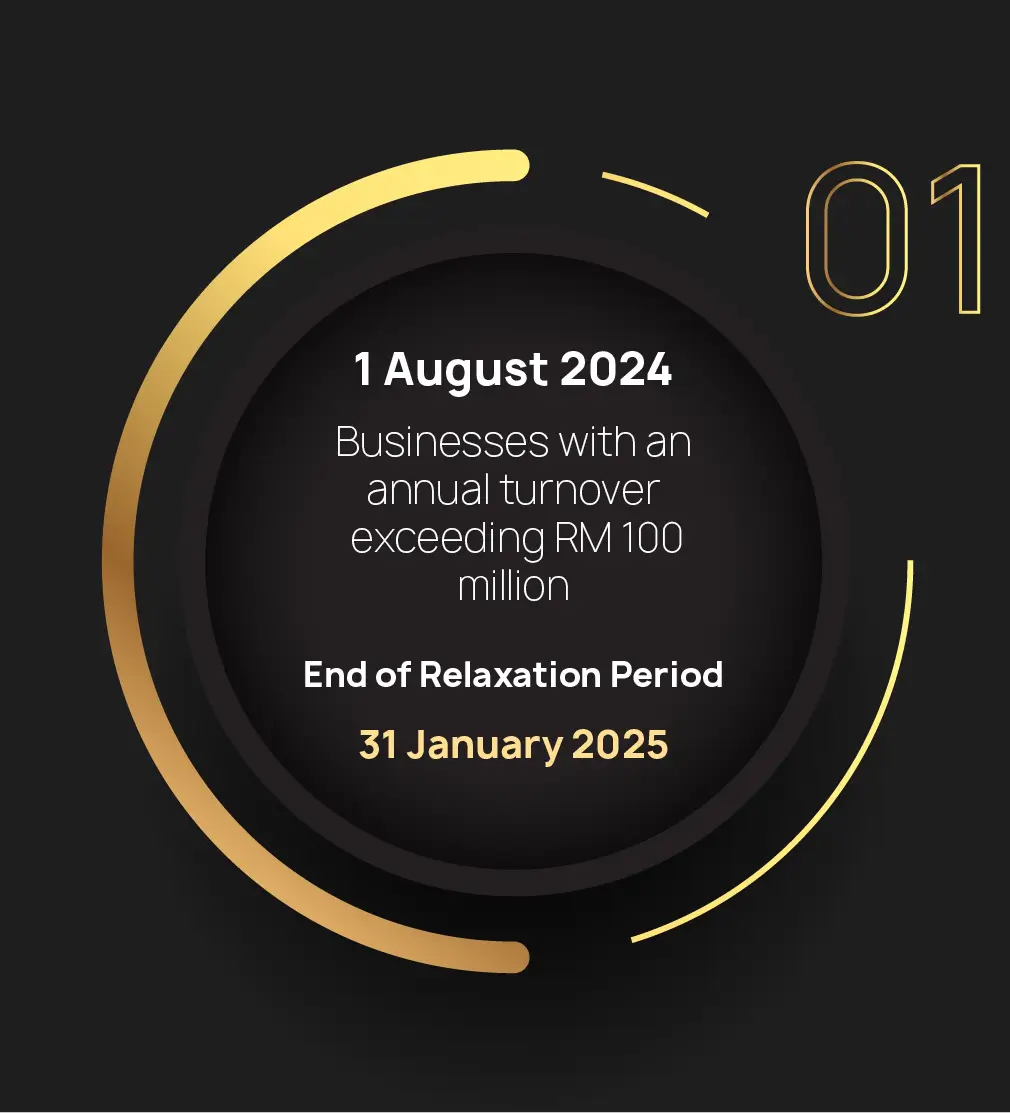
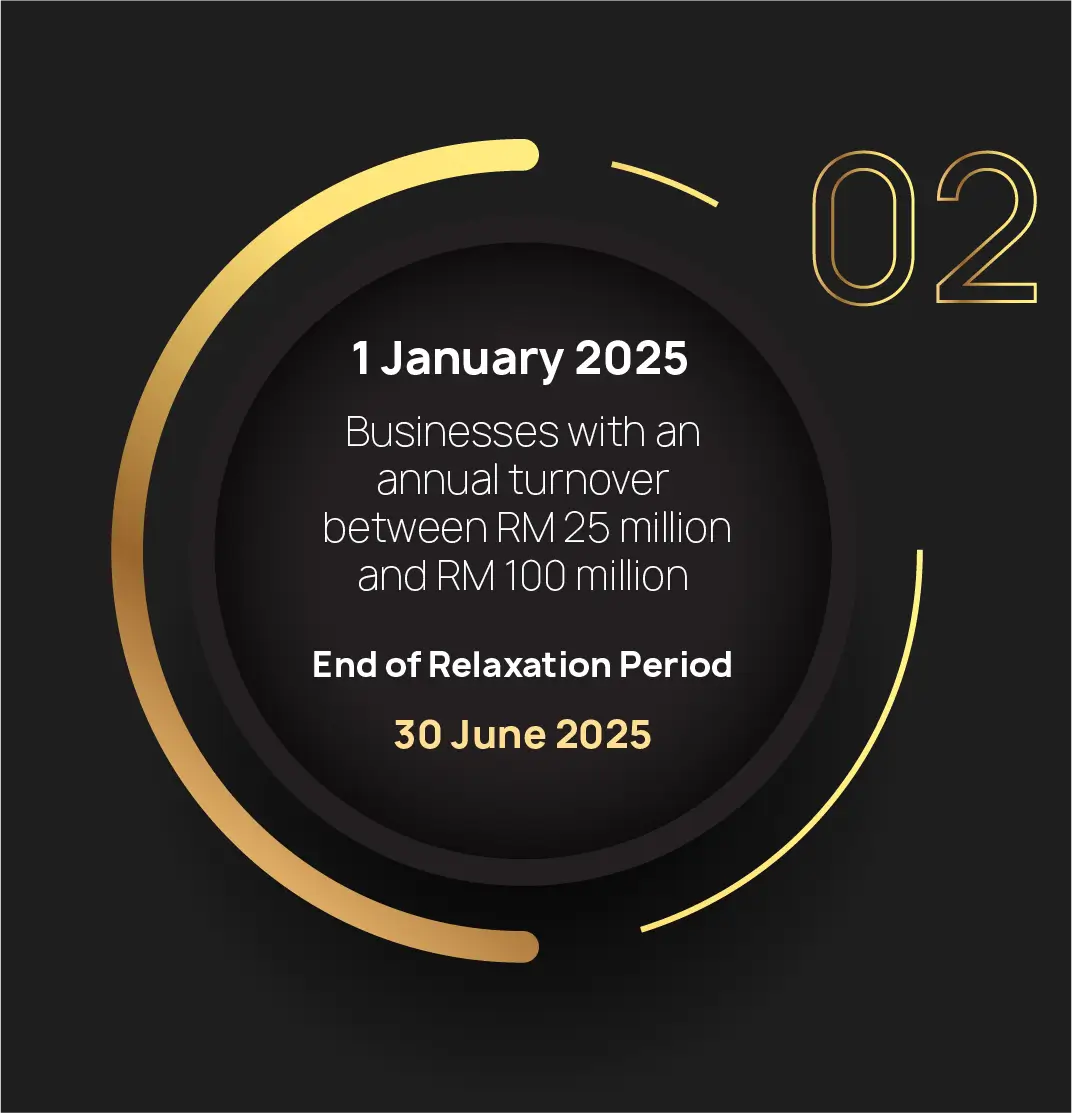
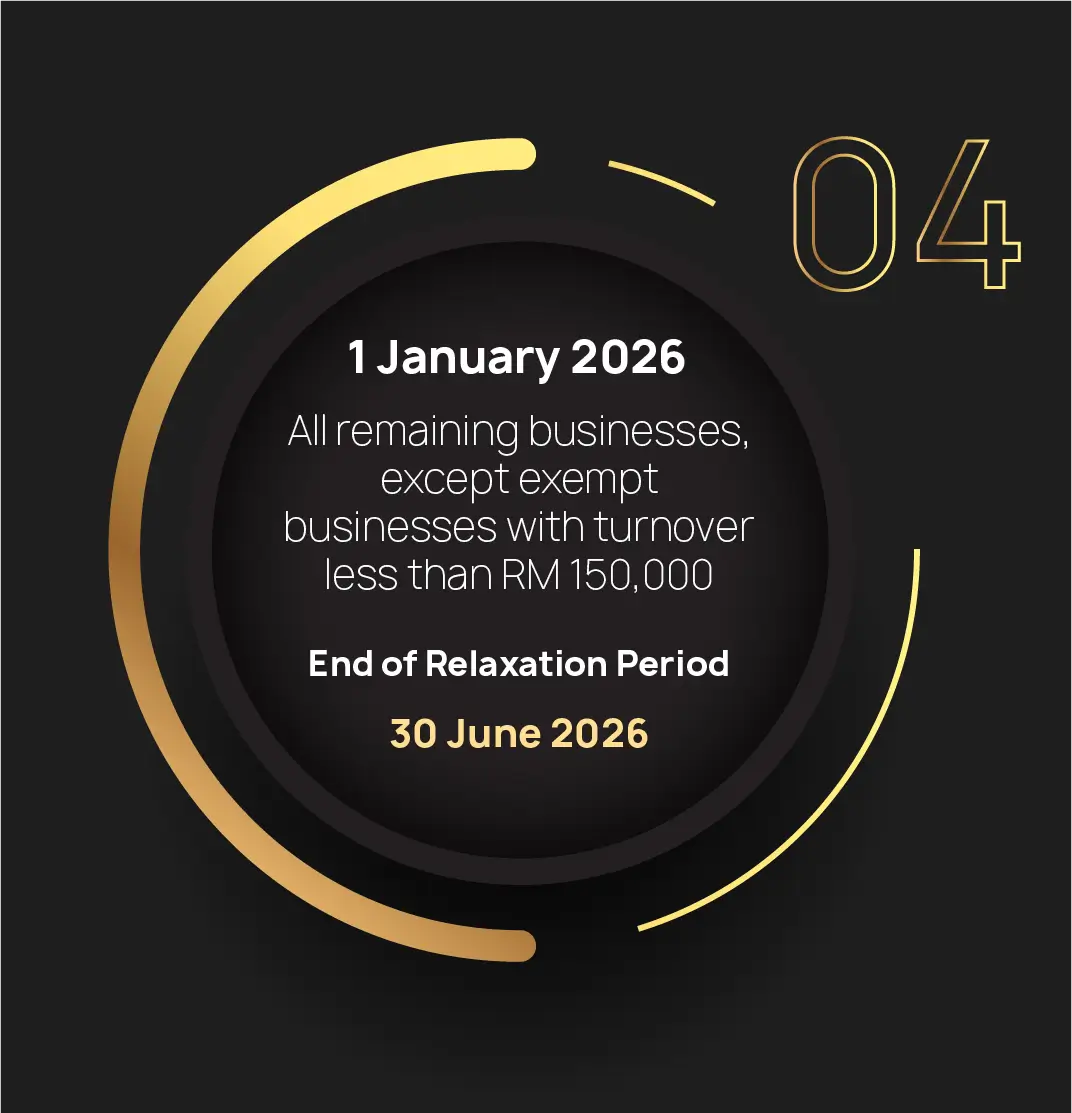
e-Invoicing Rollout Timeline in Malaysia

Malaysia’s e-Invoicing initiative is being implemented in phases, based on business turnover:
Under this system, e-invoices must be submitted to the IRBM via the MyInvois portal or through API integration using the UBL 2.1 format (XML or JSON).

What is an e-Invoice?

An e-Invoice is a digital representation of a commercial transaction between a supplier and a buyer. It is submitted in real time through the MyInvois portal for verification and validation by the IRBM.

Each e-invoice contains up to 55 mandatory data fields, including:
Buyer & Seller Details
Product/Service Descriptions
Quantity, Pricing, Taxes, and Total Amount
Payment Terms
Unique Identifier Number (UIN) and a QR Code for real-time verification

e-Invoicing Workflow in Malaysia

For B2B Transactions:

STEP 01

Issuance

Supplier submits e-Invoice via MyInvois Portal or API.
STEP 02

Validation

IRBM validates and issues a Unique Identification Number.
STEP 03

Notification

Both supplier and buyer are notified.
STEP 04

Sharing

Supplier sends the validated invoice and QR code to the buyer.
STEP 05

Rejection/Cancellation

Buyers may request rejection within 72 hours. Cancellations must be justified.
STEP 06

Readable Format

A human-readable version (PDF/JPG) can be shared with the buyer.

For B2C Transactions:

When e-Invoice is requested

Supplier collects customer details and issues e-invoice in real time.

When not requested

Transactions may be consolidated monthly into a single e-invoice.

e-Invoicing Workflow in Malaysia

MyInvois Portal

Designed for MSMEs or businesses with low invoice volumes. Users can manually generate invoices or upload in bulk via spreadsheets. The portal went live on 28 June 2024, with both test and production environments available at mytax.hasil.gov.my.

API Integration

Ideal for high-volume businesses. This allows seamless integration of existing ERP or accounting systems with the IRBM’s MyInvois system. The IRBM SDK supports this integration for developers and IT teams.

Types of e-Invoices Required

The following documents must be issued electronically under Malaysia’s e-Invoicing framework:

Invoices

Ensures financial accuracy & legal compliance (as required under Companies Act 2016)

Corporate Advisory

Used to reduce values of issued invoices

Debit Notes

Used to record additional charges

Refund Notes

Builds trust with stakeholders and potential investors

Who Must Comply?

Entities Required to Implement e-Invoicing:
Companies
Partnerships
Cooperatives
Trust Bodies
Business Trusts
Corporations and more

Exempted Entities Include:

Individuals not engaged in business
Foreign diplomatic missions
Statutory bodies for pre-1 July 2025 transactions
Taxpayers earning below RM150,000 annually

Benefits of e-Invoicing in Malaysia

Streamlined Invoicing & Tax Filing
Real-time Validation & Faster Payment Cycles
Reduced Errors & Improved Accuracy
Seamless Integration with ERP Systems
Paperless Operations and Environmentally Friendly
Enhanced Transparency in Business Transactions

Challenges Businesses Might Face

Complex Technical Integrations
Change Management & Staff Training
Limited IT Resources for Small Businesses
Compliance Risks During Transition Periods

Everything You Need to Know About e-Invoicing in Malaysia: Comprehensive FAQs for Businesses Preparing for the IRBM Mandate with MIZI & CO

The best e-invoicing solution for Malaysia is one that ensures full compliance with IRBM requirements, supports both MyInvois Portal and API integration, and fits your business size and complexity. MIZI & CO recommends choosing an IRBM-recognized provider that offers automation, real-time validation, and excellent customer support.

Malaysia offers two models for e-invoicing:

  • MyInvois Portal for manual or bulk uploads (suitable for small businesses)

  • API Integration for automated, real-time invoicing through your existing ERP or accounting system (ideal for larger businesses).

To start, you must:

  • Register and activate your MyInvois account with IRBM.

  • Choose your invoicing model (Portal or API).

  • Ensure your billing systems are ready for integration or manual uploads.

  • Train your team on the new e-invoicing workflow.

Yes, e-invoicing will eventually be mandatory across all industries based on the phased implementation timeline. However, certain exempted entities and very small businesses (below RM150,000 annual revenue) are excluded.

Businesses must generate, validate, and store e-invoices for all transactions (B2B, B2C, and B2G) through the IRBM system, comply with the UBL 2.1 format, and include mandatory transaction details like buyer/seller info, item details, tax, and payment info.

No. E-invoicing applies to both domestic and cross-border transactions involving Malaysian businesses. Specific guidelines apply to export and import activities.

The MyInvois system ensures high-level data protection through encryption, secure API protocols, and user authentication. Businesses must also implement internal data security practices to safeguard transaction data.

Yes. IRBM has issued a Software Development Kit (SDK) for businesses integrating through API. The SDK includes detailed documentation on technical requirements, testing environments, and security standards.

Disbursements generally do not require an e-invoice. However, reimbursements for expenses (where costs are incurred on behalf of another party) must be accompanied by an e-invoice.

Yes, an e-invoice can be canceled or rejected within 72 hours of issuance, but the action must be justified with valid reasons.

Yes, eventually all businesses must comply, except for those explicitly exempted by IRBM, such as certain individuals and entities with annual revenue below RM150,000.

Failure to comply can lead to penalties, fines, and possible tax audits by IRBM. Businesses are strongly encouraged to align with e-invoicing requirements to avoid non-compliance risks.

Yes, e-invoicing will be mandatory for MSMEs according to the phased timeline. However, MSMEs with annual revenue below RM150,000 are exempted.

You can contact the IRBM Helpdesk at 03-8911 1000 or +603-8911 1100 (for international calls), or email them at e-invoice@hasil.gov.my for technical support and inquiries.

Yes, MSMEs with annual revenue above RM150,000 are required to implement e-invoicing following the national rollout phases. Only MSMEs under the revenue threshold are exempted.

No, once a business has crossed the implementation threshold and is required to comply, they must continue e-invoicing even if their revenue later drops below RM150,000.

The latest update confirms that Phase 3 (businesses with turnover RM500,000–RM25 million) starts on 1 July 2025, and Phase 4 (all businesses) begins 1 January 2026. MyInvois Portal and API integration are now fully operational for testing and production.

Get Ready for Malaysia’s e-Invoicing Future with MIZI & CO!

Don't wait until the deadlines catch up. Ensure your business is fully compliant, efficient, and ready to thrive in the new digital era of taxation.
Request a Consultation
Approved Professional Auditor in Malaysia. Delivering expert audit, tax, and advisory services to help businesses grow with confidence and maintain regulatory compliance.
chevron-downmenu-circlecross-circlechevron-down-circle linkedin facebook pinterest youtube rss twitter instagram facebook-blank rss-blank linkedin-blank pinterest youtube twitter instagram